Home Service Marketing Agencies: Own Your Assets, Cut Waste & Grow Smarter
Many home service owners have the same love‑hate relationship with marketing agencies: you want predictable lead flow, but you don’t want to be handcuffed to someone else’s software, phone numbers, or ad accounts. In Episode 8 of THE Home Service Hotseat, Michael and Jonathan unpacked exactly how to build ethical, effective agency partnerships without losing control of your business.
“We’re the opposite of lock‑in. One of our core values is total ownership, radical transparency. Clients should own their assets (domains, websites, ad accounts, phone numbers) period.” – Michael Grigery, ClickCallSell CEO.
Below is a practical playbook you can use today to assess your current setup, avoid sticky traps, and turn your agency into a force multiplier instead of a single point of failure.
The Sticky Trap: Why Some Agency Setups Box You In

Websites & Phone Numbers
When agencies control your CMS, theme, hosting, and even your primary phone number, leaving becomes painful.
Ad Accounts & GBP
If your Google Ads account, Meta Ads account, or Google Business Profile (GBP) sits under the agency’s ownership, not yours, history and optimization data may not follow you when you switch.
Proprietary Themes & Walled Gardens
Custom WordPress themes or proprietary site builders often make even simple edits impossible for a new partner. Build with standard tools so any competent pro can step in. Think Toyota, not a bespoke prototype.
Rule #1: Own Your Assets (Checklist You Can Copy)
Make yourself the primary owner everywhere and give agencies the right level of access (admin/manager), not the keys to the kingdom.
Ownership Checklist
- Domain & DNS: Registered in your company name; you hold the registrar login.
- Website: WordPress (or equally standard) with mainstream theme/builder (e.g., Elementor/Astra).
- Hosting: Your account; grant SFTP/CPANEL access to vendors.
- Google Business Profile: You = Primary Owner; grant Manager roles to agency.
- Google Analytics & Tag Manager: You own containers/properties; agency has access.
- Google Ads & Meta Ads: Your business manager/MCC owns the accounts; agency is invited.
- Call Tracking: Numbers must be portable (you can move them to any provider).
- Forms/CRM/Automations: Your CRM (or your instance) stores contacts; exports are one click.
- Creative & Content: Clear license or “work‑for‑hire” language. Your logo, photos, and videos are yours.
- Reporting: You can access dashboards without the agency in the middle.
Make It a Partnership, Not a Dependency

Define “Lead” vs. “Opportunity”
Agencies often count every form fill or call as a “lead.” You care about booked estimates and sold jobs.
- Lead: Someone reached out (form/call/chat).
- Opportunity (or Estimate): You qualified and booked an estimate.
- Job: Work sold and scheduled.
Agree on definitions, then track conversion rates lead → estimate → job by channel.
Meet Monthly and Share Assets
Thirty minutes, once a month, aligned to a simple agenda:
- What changed in the market last month?
- Channel performance and costs (see metrics below).
- What you’ll provide (fresh photos, offers, before/afters, reviews).
- What they’ll test (new audience, creative, landing page).
Specialize in Home Services
Niche agencies understand seasonality, emergency vs. discretionary demand, and ticket size dynamics (e.g., drain clear vs. backyard lighting). Unconscious competence comes from doing the same industry well for years.
Seasonal Exceptions
Exclusivity is great for core services, but for ultra‑short seasons (e.g., Christmas lights), some owners allow multiple agencies because speed trumps exclusivity.
Metrics That Matter (Not Vanity)
Stop celebrating “clicks” and “impressions” that don’t connect to revenue. Track:
- Leads → Estimates → Jobs: Conversion at each stage by channel.
- Cost per Booked Job: Spend divided by jobs booked.
- Customer Acquisition Cost (CAC): Spend divided by new customers.
- Average Ticket & Close Rate: Sales effectiveness, not just lead count.
- Lifetime Value (LTV): Especially for services with strong repeat/referral.
- Brand Search Impressions & Clicks: How many people search your name. That’s a leading indicator that the brand is working.
- Review Velocity & Rating: Review count growth and average rating (GBP).
“If I’m counting a lead at the moment of engagement and you only count it when it becomes an estimate, our costs will never match. Align definitions first.” – Michael Grigery
Budget Reality in 2025: Control the Controllables
Private equity and national franchises are bidding up the bottom of the funnel (Google/LSA). In some markets, incumbents deliberately raise auction prices to freeze out new entrants.
What you can always control:
- Boots‑on‑the‑ground marketing: Yard signs (often the highest ROI), postcards in a tight radius, five‑around cards, door hangers, wrapped vehicles.
- Brand building: Consistent organic posts, job photos, micro‑videos, and community partnerships.
- Reputation & Retention: Fast review requests, service follow‑ups, and nurture for repeat/referral.
- Offer & Creative Testing: Fresh angles for shoulder seasons, not just “10% off.”
At some point, you run out of cash to buy more leads. That’s why brand, referrals, and retention matter.
A 90‑Day Action Plan to Cut Waste & Grow Smarter
Weeks 0–2: Asset & Access Audit
- Move ownership of domain, hosting, Ads, Analytics, GBP, call tracking, CRM into your accounts.
- Standardize your website stack (WordPress + mainstream builder) and confirm portability of tracking numbers.
- Document lead definitions in writing with your agency.
Weeks 2–4: Reporting & Definitions
- Build a simple dashboard (by channel): Leads, Estimates, Jobs, CPBJ, CAC, Close Rate, Avg Ticket, Brand Searches.
- Make call tracking and form routing bulletproof; mystery shop your own process.
Weeks 4–8: Performance Sprints
- Bottom‑of‑funnel: Pause keywords/ad sets with weak lead→estimate conversion.
- Creative: Rotate new job photos, before/afters, and 30‑sec explainer videos every two weeks.
- Offer: Align with buying cycles: emergency, preventative, and seasonal.
Weeks 8–12: Brand & Field Layer
- Launch a yard‑sign blitz and five‑around program your techs can run without you.
- Post 3–5 organic pieces/week: project highlights, FAQs, testimonials, “how we solve X.”
- Tighten review automation; aim for steady weekly velocity, not sporadic bursts.
Day 90: Review & Reallocate
- Shift budget to channels with the lowest cost per booked job and highest LTV.
- Schedule the next 90‑day test plan; keep what works, cut what doesn’t.
Agency Vetting Checklist (10 Questions to Ask Before You Sign)
- Who owns what? Domains, website, ad accounts, analytics, call tracking, CRM; confirm your ownership in writing.
- What stack do you build on? Avoid proprietary site builders or custom themes no one else can service.
- How do you define a “lead”? And how will we track lead → estimate → job in one report?
- Home‑service experience? Show results for your vertical and seasonality strategy.
- Local SEO approach? Technical + GBP + citations + location pages; with examples.
- Optimization cadence? What will you test weekly/monthly? What do you need from us?
- Contracts & portability? Month‑to‑month or clear exit; assets remain with you.
- Exclusivity? By service and geo? Any seasonal exceptions (e.g., holiday lighting)?
- Automation & reputation? What actually runs (copy, timing, branching) and how is it on‑brand?
- References & samples? Two current clients you can talk to; live pages and dashboards you can see.
Good partners are responsible stewards of your budget. They tell you what not to spend just as often as where to invest.
When (and When Not) to Buy SEO
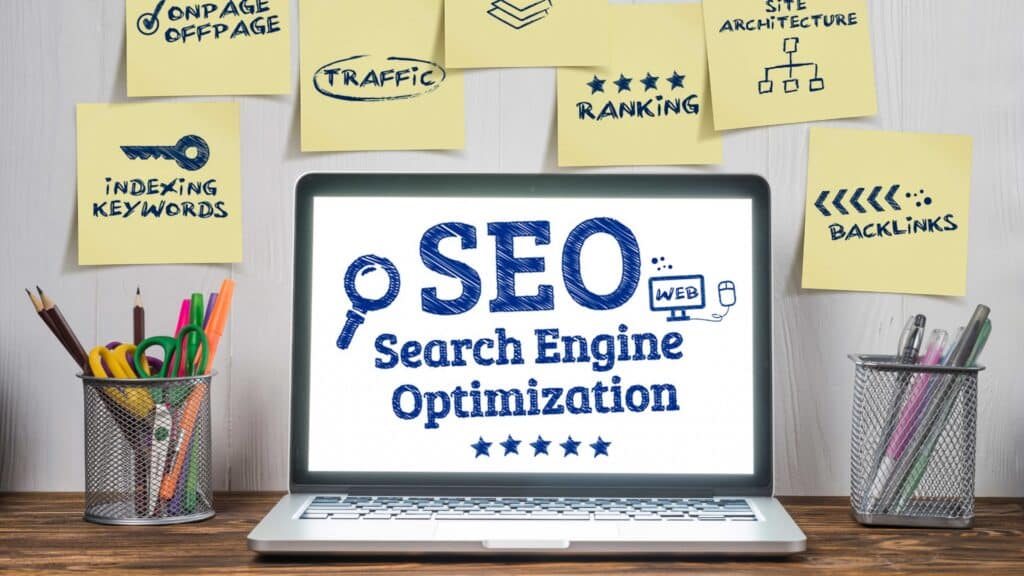
Start With Technical + Local
- Fast, clean site; schema basics; error‑free tracking.
- GBP optimization, category tuning, service areas, and review velocity.
Pause “Big SEO” Until It’s Justified
- If you’re under ~$1M ARR, focus on technical/local + brand + bottom‑of‑funnel.
- “Big SEO” (content + PR + link building) makes sense once you can sustain $2–5k/month without starving higher‑yield channels.
Avoid Gray/Black‑Hat Shortcuts
- Hacks can work until an update nukes your rankings overnight. Don’t stake your funnel on loopholes.
Build Brand Signals Everywhere
- Consistent content across GBP, YouTube, Instagram, Facebook, TikTok then track brand search as the payoff.
What “Set It and Forget It” Really Means (and Why It Fails)

Automation done right (review asks, lead nurturing, reminders) saves time; automation done wrong is off-brand and ignored. Here’s some advice: “Make it feel familiar; your voice, your visuals, your promise. People respond to brands they recognize.”
Do:
- Approve SMS/email copy and timing.
- Refresh creative quarterly.
- Tie every automation to a real metric (e.g., review rate from 4.6→4.8, brand clicks +30%).
Don’t:
- Pay premium fees for generic newsletter blasts and stock content no one reads.
- Let automations run stale for months without QA.
Lightbulb Examples from the Episode
- Locked‑out website: An owner’s site vanished the day they canceled the agency. The fix: migrate to standard WordPress, retain hosting logins, and keep portable call tracking.
- Auction warfare: In one market, a seven‑figure holiday‑lighting operator willingly overpaid for leads to price out new entrants. The lesson: win with brand demand, not just bid wars.
- Lead vs. estimate mismatch: Agencies counted every call; the owner counted only booked estimates. Once definitions aligned, the “cost per lead” made sense and optimization got easier.
CTA: Book a 30‑Minute Marketing Assets Audit
Want a neutral gut‑check on ownership, tracking, and spend? Book a 30‑minute Marketing Assets Audit and leave with a prioritized fix‑list and a simple scorecard.